logo

New Piezoelectric Sensors Simplify Ultrasonic Vibration Analysis

August 24, 2026

blog công ty mới nhất về New Piezoelectric Sensors Simplify Ultrasonic Vibration Analysis

When facing complex ultrasonic vibration systems in laboratories, engineers often struggle to identify deeply embedded vibration characteristics. While laser vibrometers offer precision, they frequently fail when surfaces have poor reflectivity, liquid coatings, or confined spaces. On industrial production lines, shutdowns for testing represent prohibitively expensive luxuries. The solution? A portable "probe" that functions like a stethoscope—providing instant vibration diagnostics through simple contact.

Why Touch-Based Measurement Matters

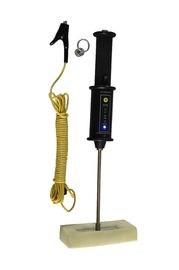
Ultrasonic Vibration Systems (UVS) contain complex structures with multiple vibration modes and high-frequency harmonics. Comprehensive performance analysis typically requires measuring dozens—sometimes hundreds—of characteristic points. Traditional methods prove time-consuming and often yield inaccurate data with complex geometries. The handheld piezoelectric sensor (pencil-type) emerges as an ideal solution, capturing amplitude and frequency data through brief contact (typically one second), making it perfect for preliminary screening and fault detection.

Engineering Challenge: Minimizing Measurement Interference

The sensor's design hinges on balance. To avoid altering a system's natural vibrations, the device must be exceptionally lightweight. The prototype achieves this through:

  • Core Sensing: A 0.2mm-thick square piezoelectric ceramic chip (total weight: 8mg) transmits raw signals directly to oscilloscopes, eliminating phase/amplitude distortion from electronic processing.
  • Structural Optimization: The sensor head (needle tip + piezoelectric chip) weighs under 33mg. A specially designed spring-steel connector minimizes resonance interference through material selection (spring steel) and geometric modeling (rectangular cross-section).
Experimental Validation: From Lab to Field

Rigorous testing confirmed the sensor's reliability:

  • Impedance Analysis: Frequency scans (20kHz–96kHz) showed stable performance with negligible resonance interference, meeting standard UVS inspection needs.
  • Correlation Verification: Tests on operational UVS (26kHz–96kHz) demonstrated strong correlation between sensor output voltage and laser vibrometer amplitude measurements (0.4μm–1.2μm range showed near-linear dependence).
  • Pressure Optimization: 0.8N–1.2N contact pressure delivered optimal results. Excessive force (>1.8N) caused frequency detuning or amplitude attenuation in small test systems (<55g).
Limitations and Practical Applications

While excelling below 100kHz, signal stability diminishes at higher frequencies due to mechanical contact limitations. This tool isn't intended to replace high-precision laser measurements but serves as a "scout"—helping engineers rapidly identify critical areas among numerous test points, thereby optimizing time-intensive detailed measurements. This cost-effective solution offers significant value for industrial quality control and scientific research.

Hãy liên lạc với chúng tôi
Người liên hệ : Mr. JingAn Chen
Tel : 8610 82921131,86 13261934319
Fax : 86-10-82916893
Ký tự còn lại(20/3000)